
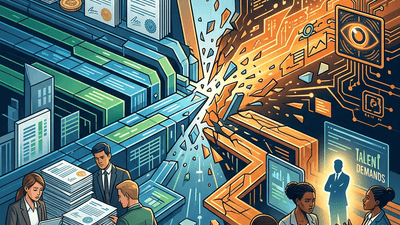



For generations of U.S. accountants, the "sea of red ink" on a returned workpaper has been a visceral rite of passage. The rigorous, sometimes grueling review process has long been defended as the crucible in which technical competence is forged and audit quality is maintained. But in 2026, the traditional concept of the review is buckling under a perfect storm of pressures: a severe talent shortage demanding better workplace cultures, the integration of generative AI requiring new forms of verification, and a newly aggressive regulatory stance from the top.
We are witnessing a paradigm shift in how quality control is executed. The question is no longer just whether a review is thorough enough to catch a material misstatement. Today, firm leaders must ask if their review processes are driving staff away, if they are equipped to catch algorithmic hallucinations, and if they can withstand the scrutiny of a revitalized Public Company Accounting Oversight Board (PCAOB).
The Fine Line: When Does "Tough" Become Toxic?
At the heart of the profession's current identity crisis is the human element of quality control. A recent exploration by Thomson Reuters into accounting review culture highlights a growing friction point: the fine line between constructive coaching and harsh, demoralizing criticism.
Historically, the "tough review" was accepted as an unalterable reality of the job. Managers, under immense pressure from partners and deadlines, often passed that pressure downward through blunt, unvarnished feedback. However, the ongoing CPA pipeline crisis has shifted the leverage. Young professionals, highly sought after in a resource-constrained market, are increasingly unwilling to tolerate review environments they perceive as toxic.
"The goal of a review should be to elevate the work and educate the preparer, not to break their spirit. In a market where talent can easily walk across the street for a 15% raise, weaponizing the review process is a fast track to partner burnout and staff attrition."
Firms are now being forced to train managers not just in technical accounting, but in emotional intelligence and feedback delivery. The focus is shifting from "finding what's wrong" to "explaining the why." When a junior staffer understands the underlying tax law or audit standard behind a review note, they are less likely to repeat the error—and less likely to view the correction as a personal attack.
The Regulatory Squeeze: PCAOB's Inspection Overhaul
If internal talent pressures are pushing firms to soften the delivery of reviews, external regulatory pressures are forcing them to harden the substance. The stakes for getting it right have arguably never been higher.
Under new leadership, the regulatory environment is tightening. As reported by Thomson Reuters, PCAOB Chairman Logothetis is planning a comprehensive overhaul of the audit inspection program. The explicit goal is to better protect investors and drive up the baseline quality of public company audits.
This overhaul is not merely a bureaucratic reshuffling. It signals a more aggressive, less forgiving inspection regime that will look closely at systemic quality control issues within firms. When the PCAOB turns up the heat on firm leadership, that heat invariably flows downhill. Audit partners, terrified of a deficient inspection report, are demanding more rigorous documentation and deeper skepticism from their review teams.
What the PCAOB Overhaul Means for the Trenches
- Heightened Skepticism Requirements: Reviewers can no longer simply tick and tie; they must document exactly how they challenged management's assertions.
- Focus on Root Cause Analysis: When errors are found internally, firms must demonstrate they are addressing the root cause, not just fixing the isolated mistake.
- Pressure on Timelines: More rigorous reviews require more time, exacerbating the friction between quality control and client deadlines.
The Machine in the Middle: Reviewing the AI
Complicating this dynamic is the rapid adoption of Artificial Intelligence. For decades, reviewers were checking the work of human beings—looking for transposed numbers, misunderstood tax codes, or logical leaps. Today, reviewers are increasingly checking the output of machines.
This requires an entirely new skill set. As tax practitioners have recently warned, AI introduces novel risks regarding accuracy and data privacy. Generative AI tools can produce tax memos or audit summaries that read beautifully but are legally fictitious—a phenomenon known as "hallucination."
Furthermore, without strict data governance, junior staff might feed sensitive client financial data into open-source AI models to speed up their workflow, inadvertently violating client confidentiality and breaching professional ethics.
The review process must now adapt to include AI Skepticism. Reviewers must ask:
- Was AI used to generate this workpaper or memo?
- If so, what specific tool was used, and is it approved by the firm's IT and legal departments?
- Has the underlying source data been independently verified, or are we relying on a machine's interpretation of a tax statute?
Redefining the Framework: Traditional vs. Modern Review
To survive this collision of talent demands, regulatory scrutiny, and technological risk, firms must formally restructure their review processes. The ad-hoc, partner-dependent review styles of the past are too risky for the current environment.
| Element | Traditional Review Process | Modern Quality Control Framework |
|---|---|---|
| Objective | Catch errors before issuance. | Educate staff, catch errors, and identify systemic workflow weaknesses. |
| Delivery | One-way, often blunt written notes. | Collaborative, incorporating "the why" and encouraging dialogue. |
| Technology | Manual tickmarks and cross-referencing. | Automated anomaly detection prior to human review; rigorous AI output verification. |
| Regulatory Focus | Compliance with baseline GAAP/GAAS. | Proactive alignment with evolving PCAOB inspection priorities and root-cause analysis. |
Conclusion: The Future of the Red Pen
The accounting profession cannot afford to abandon the rigorous review. In an era where the PCAOB is actively hunting for audit deficiencies and AI is introducing unprecedented accuracy and privacy risks, robust quality control is the only thing standing between a firm and existential reputational damage.
However, the method of that review must evolve. The days of hazing junior staff through demoralizing feedback are over, killed by a talent market that simply won't tolerate it. The modern reviewer must be part technical expert, part regulatory watchdog, part AI auditor, and part mentor. Firms that can train their managers to balance these competing demands—delivering uncompromising quality without compromising psychological safety—will not only survive the PCAOB's new era but will win the war for the next generation of accounting talent.