
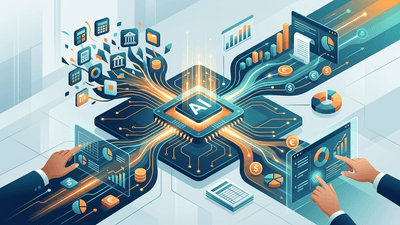



For the better part of a decade, the prevailing wisdom in accounting technology was simple: there’s an app for that. Need to manage receipts? Download an app. Need to track time? Integrate a plugin. But as we navigate the spring of 2026, this "best-of-breed" philosophy has birthed a Frankenstein monster of disconnected software, API breakages, and profound app fatigue. Now, a profound architectural shift is underway. The industry is rapidly abandoning the fragmented app ecosystem in favor of a unified, AI-native operating system.
This week’s slate of technology and regulatory announcements highlights a profession at an inflection point. Driven by mounting compliance pressures—ranging from complex state climate mandates to evolving government accounting standards—major platforms and Top 100 firms are fundamentally rebuilding how financial data is processed, forecasted, and assured.
The Rise of the "Agent-Native" Accounting OS
The most significant indicator of this shift came this week when global small business platform Xero unveiled Xero OS, a fundamentally redesigned, AI-native operating system. This is not merely a conversational chatbot bolted onto legacy code. Xero OS is engineered from the ground up to power "autonomous finance," streamlining accounting workflows so that data flows seamlessly without human intervention.
This pivot from tools to agents is echoing across the highest echelons of the profession. Top 10 firm CBIZ just announced an expanded AI partnership with Microsoft to leverage Microsoft Foundry. Their goal? To develop an "agent-native operating platform" specifically tailored for its professionals. By deeply embedding AI agents into the fabric of the firm's daily operations, CBIZ is signaling that the future of firm management relies on software that can independently execute multi-step tasks, rather than just waiting for a human to click a button.
Real-Time Margin Management Replaces Retroactive Reporting
As the underlying operating systems become smarter, the applications built on top of them are becoming aggressively forward-looking. Historically, professional services firms and their clients have managed margins by looking in the rearview mirror. By the time the books were closed, the opportunity to correct course had vanished.
This week, Certinia launched Services Forecasting, a platform designed specifically to unify cost and revenue data for professional services and accounting organizations. The platform aims to move firms toward real-time margin management.
"Forecasting can no longer be a quarterly spreadsheet exercise. In a high-cost talent environment, firms need to see the financial impact of a delayed project or a shifted resource allocation the moment it happens, not thirty days later."
By unifying disparate data streams into a single forecasting engine, platforms like Certinia are allowing firm leaders to run predictive models on utilization, realization rates, and engagement profitability in real time.
Why Now? The Regulatory Catalyst for Unified Tech
Why is this massive technological consolidation happening right now? The answer lies in the escalating complexity of the regulatory environment. Fragmented tech stacks simply cannot handle the interconnected compliance demands of 2026.
The Climate Compliance Crucible
Consider the evolving landscape of Environmental, Social, and Governance (ESG) reporting. The AICPA and the California Society of CPAs recently submitted a joint comment letter to the California Air Resources Board regarding the state's landmark climate law. The accounting bodies are urgently calling for increased minimum assurance requirements related to greenhouse gas (GHG) data.
Providing assurance on Scope 1, 2, and 3 emissions requires ingesting massive, unstructured datasets from across a client's entire supply chain. You cannot perform rigorous GHG assurance using siloed legacy software. AI-native operating systems that can autonomously cross-reference utility data, supply chain manifests, and financial ledgers are becoming a prerequisite for this new frontier of advisory and assurance work.
Public Sector and IRS Modernization
Even the public sector is recognizing the need for streamlined, digital-first interfaces, pushing client expectations higher.
- IRS Digital Debt Management: The IRS just released a new online tool to help taxpayers and businesses manage tax debt. The tool allows users to review payment options without requiring specialized tax expertise, reflecting a broader government push toward self-service digital autonomy. As the IRS modernizes its interfaces, clients expect their CPAs to offer similarly seamless, real-time digital experiences.
- GASB's Structural Overhaul: The Governmental Accounting Standards Board (GASB) is currently seeking stakeholder input on simplifying the structure it uses to communicate Generally Accepted Accounting Principles (GAAP) for state and local governments. As regulatory bodies attempt to untangle complex standards, the software that operationalizes these standards must be deeply integrated to ensure compliance isn't lost in translation between different applications.
The Old Stack vs. The New OS
To understand the magnitude of this shift, it is helpful to contrast the traditional accounting tech stack with the emerging AI-native operating systems.
| Feature | Legacy App Stack (2015-2024) | AI-Native OS (2026 & Beyond) |
|---|---|---|
| Data Integration | Relies on fragile APIs and manual CSV exports. | Unified data lakes; information flows natively. |
| Workflow | Human-driven; software waits for inputs. | Agent-driven; autonomous finance executes routine tasks. |
| Forecasting | Retrospective; heavily reliant on Excel. | Real-time; predictive margin management (e.g., Certinia). |
| Compliance | Siloed modules for tax, audit, and advisory. | Holistic; capable of cross-referencing ESG and financial data. |
The Forward-Looking Firm
The introduction of platforms like Xero OS and CBIZ’s Microsoft Foundry initiative marks the beginning of the end for the fragmented accounting tech stack. For U.S. accounting professionals, the implications are profound.
First, firm leaders must audit their current technology investments. Are you paying for dozens of disjointed applications that require manual reconciliation, or are you investing in unified platforms capable of housing AI agents? Second, as routine data movement becomes autonomous, the value proposition of the CPA shifts entirely toward interpretation, strategy, and complex assurance—such as the emerging California climate mandates.
We are entering an era where technology is no longer just a tool you use; it is an agent you manage. Firms that embrace this operating system mindset will find themselves uniquely equipped to handle the rising tide of regulatory complexity, while those clinging to their patchwork of apps risk drowning in the friction.