This session features the latest behavioral science, interactive audience experiments, and compelling real-life stories to disrupt everything you thought you knew about the fraud.
This session features the latest behavioral science, interactive audience experiments, and compelling real-life stories to disrupt everything you thought you knew about the fraud. It will spur you to challenge “sacred cows” of the industry and help you develop better-thinking approaches to detect, deter, or investigate fraud, waste, and abuse. Learn why many of our basic assumptions about fraud are flawed, why some widely accepted investigative practices are more harmful than helpful, and how auditors and investigators sometimes unwittingly assist fraud schemes.
Major Subjects: • How we unwittingly assist in the production of misleading information • The neuroscience of psychopathy • Behavioral profiling • The new psychology of skepticism • Cognitive errors including attribution and overgeneralization • How experience, intuition, and assumptions can cause cognitive errors
Designed for: Audit, governance, investigative and compliance professionals wanting to learn more effective ways to deter, detect and investigate fraud and gain a deeper understanding of behavioral science surrounding fraud and related threats.
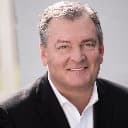
Researcher and Speaker
Dr. Toby Groves is a researcher and speaker on social-cognitive psychology that has spent the past decade studying decision-making and culture. He conducts innovative research in the areas of professional skepticism, implicit bias, and decisions under pressure, and uses imaginative audience experiments to demonstrate his concepts.
