Leverage behavioral psychology and critical thinking to outsmart sophisticated fraudsters and detect the subtle red flags of financial crime that automated systems miss.
Fraud and financial crime prevention is often treated as a systems problem—managed through controls, surveillance, reporting lines, and compliance metrics. Yet many of the most significant breakdowns occur long before an alert is triggered, shaped instead by culture, behavior, incentives, and organizational silence.
“The Human Edge in Fraud and Financial Crime Prevention” examines the critical role of the human and cultural dimension in strengthening prevention frameworks. It explores how weak speak-up environments, fear-based leadership, misaligned incentives, and fragmented accountability can create conditions where misconduct develops unnoticed or unreported.
This session shifts the focus from detection after the fact to prevention at the source. Participants will explore how behavioral drivers influence fraud risk and how leadership, communication, trust, and workplace design directly impact compliance outcomes and investigative effectiveness.
Designed for fraud examiners, compliance professionals, investigators, and leaders, the session provides practical strategies to surface cultural risk early, improve escalation pathways, and build environments where ethical conduct becomes a core operational strength.
Key Topics Discussed:

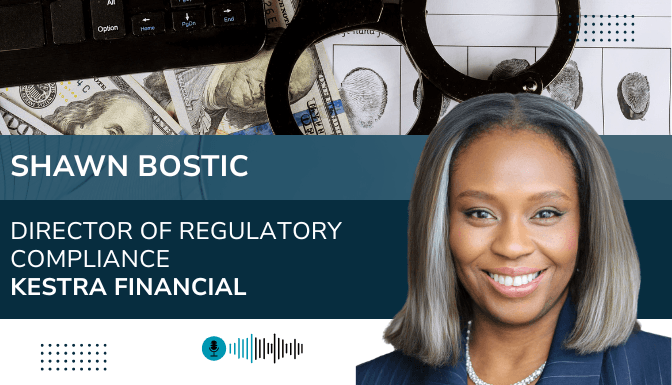
Director of Regulatory Compliance | Kestra Financial
Shawn Washington Bostic, DM, CFE, is the director for regulatory compliance of Kestra Financial. In her role, Dr. Bostic serves as regulatory contact for the firm and an adjudicator for the disciplinary review committee, responding to regulatory requests, exams, inquiries, customer complaints, and more. Some of her contributions to the firm include implementing a risk rank tool for the review of financial professionals and the restructure of the disciplinary process for escalated issues. Dr. Bostic has spent approximately 30 years as a compliance professional for mutual fund companies, consulting firms, investment advisers, and various broker-dealers. She is a published writer, speaker for the financial services industry, as well as a former columnist addressing modern social issues and ethics. In 2018, Dr. Bostic received her Doctor of Management in Organizational Leadership. Her dissertation proposal entitled “Compliance with FINRA Regulations” was presented at Cambridge University in London and won an Advanced Degree Scholarship.
