Equip yourself with actionable strategies to combat fraud, mitigate regulatory risks, and build a resilient culture of corporate integrity using real-world compliance frameworks.
Financial crime and ethical failures continue to present significant risks across both public and private sectors, demanding robust governance, effective controls, and a proactive compliance culture. This practical session explores how organisations can strengthen their defences against financial crime while embedding ethical governance at the core of decision-making.
Drawing on real-world investigative considerations and established integrity frameworks, the session examines anti-bribery principles, ISO 37001 concepts, and practical approaches to managing whistleblower concerns within the public sector. Participants will gain actionable insights into strengthening organisational resilience, improving reporting mechanisms, and supporting a culture of accountability and transparency.
Key Topics Discussed:

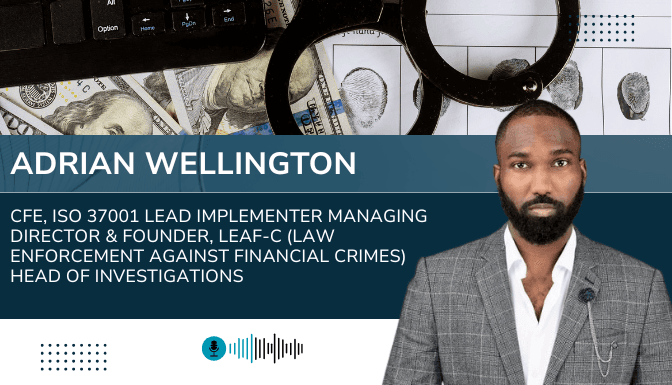
Managing Director & Founder, LEAF-C (Law Enforcement Against Financial Crimes) | Head of Investigations at a Multi-Jurisdictional Telecommunications Company
Adrian Wellington is an ethics, compliance, and investigations professional with over a decade of experience across law enforcement, corporate investigations, and governance. His work focuses on strengthening organisational integrity through effective investigations, whistleblowing and concerns management systems, anti-corruption frameworks, and enterprise risk mitigation. He currently leads investigations and concerns management across multiple markets, supporting organisations in identifying misconduct, managing whistleblower reports, and enhancing internal control environments. His experience includes conducting and supervising complex investigations involving fraud, procurement irregularities, corruption risks, and internal misconduct, alongside developing investigative frameworks and governance policies that improve transparency and accountability. Earlier in his career, he authored the pioneering Jamaica Constabulary Force Polygraph Unit Policy, which was later referenced by several U.S. law enforcement agencies, contributing to advancements in investigative standards and professional practice in polygraph examination use. Alongside his professional practice, he serves as an Adjunct Lecturer at the University of the Commonwealth Caribbean and the Real Estate Training Institute, where he teaches subjects including white-collar crime, cybercrime, legal and ethical issues in criminal justice, POCA, TPA, and governance in real estate practice. He is a Chevening Scholar and holds an MSc in Forensic Accounting with Distinction from Northumbria University, as well as a postgraduate qualification in Education and Training. His professional certifications include Certified Fraud Examiner (CFE), Certified Procurement Professional (CPP), Certified Polygraph Examiner (CPE), Certified Polygraph Supervisor (CPS), and ISO 37001 Lead Implementer certification. His professional interests centre on corporate investigations, anti-corruption compliance, governance frameworks, internal reporting mechanisms, and the development of strong speak-up cultures within organisations.
