Unveiling the Foundations: Exploring the Origins of Accounting, the Significance of GAAP, and Demystifying the Unique Language of Financial Professionals

NOTE: This is an introductory level course on accounting principle and internal controls. It is targeted for professionals just entering the profession, individuals who may be bookkeepers for their organizations or even management individuals who have not been formally schooled in the concepts of accounting.
The early development of accounting dates back to ancient Mesopotamia. It is related to developments in writing, counting and money and early auditing systems as developed by the ancient Egyptians and Babylonians. By the time of the Roman Empire, the government had access to detailed financial information.
In today’s business world, almost all professions must have a basic understanding of accounting concepts and principles. This is critical to running an effective and efficient organization. Absent standards, companies would be free to present financial information in whatever format best suits their needs.
Generally accepted accounting principles are a set of rules that encompass the details, complexities and legalities of business and corporate accounting. The Financial Accounting Standards Board uses GAAP as the foundation for its comprehensive set of approved accounting methods and practices. GAAP is not static. It includes complex standards issued in response to very complicated business transactions. Often these practices are a response to changes in government regulations of industry.
Compliance with GAAP principles is built on three rules that aim to eliminate misleading accounting and financial reporting practices. These parts of GAAP include:
These rules create consistent accounting and reporting standards which provide prospective and existing investors with reliable methods of evaluating an organization’s financial standing.
All professions have their own “unique language”. Accounting is no different. Prior to delving into concepts like accounting principles, considerations, GAAP; it is important to first understand and define some important accounting terms. We will begin with terms that are crucial to understanding the meaning behind accounting principles and concepts and then move further into the concepts related to the financial statements and internal control.
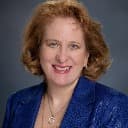
Lynn Fountain has over 45 years of experience spanning public accounting, corporate accounting and consulting. 24 years of her experience has been working in the areas of internal and external auditing. She is a subject matter expert in multiple fields including internal audit, ethics, fraud evaluations, Sarbanes-Oxley, enterprise risk management, governance, financial management and compliance. Ms. Fountain has held two Chief Audit Executive positions for international companies. In 2011, as the Chief Audit Executive for an international construction/ engineering firm, she was involved in the active investigation of a joint venture fraud. The investigation included work with the FBI and ultimately led to indictment of the perpetrators and recovery of $13M. Ms. Fountain is currently engaged in her own training and consulting business and is a regular trainer for the AICPA. Ms. Fountain is the author of three separate technical books. “Raise the Red Flag – The Internal Auditors Guide to Fraud Evaluations” was published by the Institute of Internal Auditors Research Foundation. -“Leading The Internal Audit Function” and -“Ethics and The Internal Auditor Political Dilemma” were published by Taylor & Francis In addition Ms. Fountain was a contributing author to the certification program exam for the National Association of Accountants. She also has certificate programs on various on-line platforms. Ms. Fountain has performed as an adjunct instructor for the School of Business for Grantham University and developed the first internal audit curriculum for the School of Business at the University of Kansas. Ms. Fountain obtained her BSBA from Pittsburg State University and her MBA from Washburn University in Kansas. She has her CGMA, CRMA credentials and CPA certificate (non-active).
