LF logo
by learnformula
search
Log in
search
Courses/Law/Business/ Corporate Law

Due Diligence for Aviation Company Acquisitions

Understanding FAA and DOT compliance in the acquisition of aviation entities
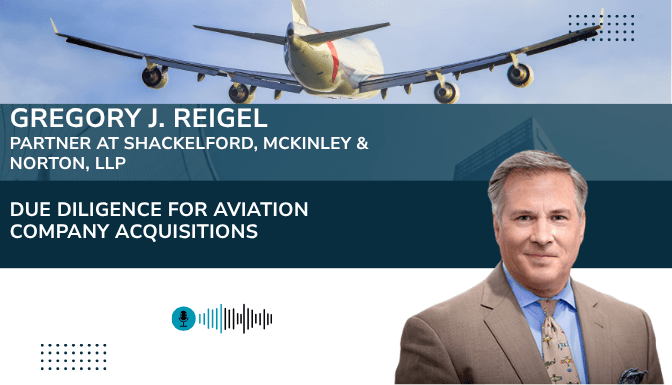
Created byGregory J. Reigel
BeginnerUpdated Apr 15, 2026
Due Diligence for Aviation Company Acquisitions

What You'll Learn

check_circleIdentify and evaluate the FAA and DOT certificates and permits held by a target aviation company.
check_circleUnderstand compliance requirements for certificated and non-certificated entities.
check_circleRecognize issues impacting citizenship, authorizations, and transferability.
check_circleImplement best practices for regulatory due diligence in aviation acquisitions.

About This Course

Acquiring an aviation company is more than just reviewing financials—it requires careful attention to regulatory compliance. This program provides a practical overview of due diligence for certificated and non-certificated aviation entities, including carriers, repair stations, training centres, FBOs, and management companies. Attendees will learn how to identify required certificates and permits, evaluate regulatory compliance, and anticipate post-acquisition obligations.

What You Will Learn

Through real-world case studies and expert-led modules, participants will learn how to execute a flawless due diligence process across five critical pillars:

  • Regulatory & Compliance Due Diligence: Understand the hurdles of aviation authorities (FAA, EASA, DOT), foreign ownership and control restrictions (FOC), antitrust considerations, and air operator certificate (AOC) transfers.
  • Technical & Asset Valuation: Learn how to assess the true health of an aviation company’s physical assets. Topics include aircraft and engine valuations, maintenance reserves, logbook auditing, and end-of-life asset management.
  • Financial & Commercial Due Diligence: Go beyond the balance sheet. Analyze route profitability, complex aircraft leasing structures (ACMI, dry/wet leases), fuel hedging strategies, and ticketing/revenue accounting.
  • Legal & Environmental Liabilities: Identify hidden legal risks including pending litigation, environmental compliance (emissions, noise regulations, PFAS at facilities), and third-party vendor contracts.
  • Human Resources & Operations: Evaluate the impact of pilot and mechanic shortages, collective bargaining agreements (labor unions), and the integration of diverse safety cultures and SMS (Safety Management Systems).

Who Should Attend?

This course is highly recommended for professionals involved in aerospace and defense M&A, including:

  • Private Equity and Venture Capital Investors
  • Investment Bankers and Financial Analysts
  • Corporate Development Executives at Aviation Companies
  • M&A Lawyers and In-House Counsel
  • Aviation Consultants and Fleet Appraisers
  • Post-Merger Integration (PMI) Specialists

Your Instructor

Gregory J. Reigel
Gregory J. Reigel

Partner at Shackelford, McKinley & Norton, LLP

menu_book1 courses

Greg has more than two decades of experience working with airlines, charter companies, fixed base operators, airports, repair stations, pilots, mechanics, and other aviation businesses in aircraft purchase and sale transactions, regulatory compliance including hazmat and drug and alcohol testing, contract negotiation, airport grant assurances, airport leasing, aircraft related agreements, wet leasing, dry leasing, FAA certificate and civil penalty actions and general aviation and business law matters.

Credit Information

What Students Are Saying

0.0
Student's Choice
0 reviews

Frequently Asked Questions

We are a registered provider with 327+ associations and regulatory bodies worldwide. We operate across 29 global markets including Canada, the US, Australia, and the UK. Every course page clearly displays its specific accreditations. Upon completion, you receive a professional certificate that can be validated online. Our certificates include all necessary accreditation details, credit hours, and completion dates, and are formatted specifically to meet the submission requirements of most global regulatory bodies.