LF logo
by learnformula
search
Log in
search
Courses/Finance/Technology and FinTech

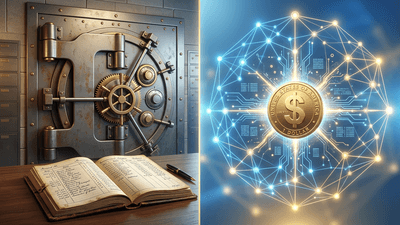
Cross-Border Payments: Stablecoins vs. Traditional Wire

Are traditional banking rails becoming obsolete? An honest look at the costs, risks, and the emerging hybrid future of global finance.
Created byBlockchain Legal Institute
BeginnerUpdated Aug 13, 2026
Cross-Border Payments: Stablecoins vs. Traditional Wire

What You'll Learn

check_circleIdentify the key components and limitations of the traditional correspondent banking and SWIFT messaging systems.
check_circleCompare the cost structures and transaction speeds of traditional wire transfers versus stablecoin settlements.
check_circleAnalyze the risks associated with stablecoin usage, including issuer solvency, reserve quality, and custody.
check_circleEvaluate the role of regulatory frameworks like MICA and the Genius Act in the future of digital assets.
check_circleApply a decision framework to determine the appropriate payment method based on specific business needs and risk tolerance.

About This Course

This course provides a comprehensive operational comparison between traditional correspondent banking wire systems and modern fiat-backed stablecoin payment rails. Designed for financial executives, corporate treasurers, compliance officers, and legal counsel, the session evaluates the mechanics of moving value versus verifying permission. Participants will gain actionable insights into fee structures, liquidity costs, settlement finality, compliance frameworks (including the GENIUS Act and MiCA), and the emerging paradigm of real-time compliance-at-the-transfer.

Learning Objectives:
  1. Analyze Payment Rail Architectures: Distinguish between value transfer and permission verification in correspondent banking (SWIFT, Nostro/Vostro) and public blockchain rails
  2. Evaluate Cost & Settlement Efficiency: Assess fee components, pre-funded liquidity taxes, time-zone friction, and settlement speeds across traditional wires and stablecoins.
  3. Navigate Regulatory & Risk Landscapes: Understand the legal frameworks governing stablecoins (GENIUS Act, MiCA) and weigh risks including depeg events, key custody, and Herstatt risk.
  4. Implement Programmable Governance: Explore native smart-contract controls and compliance-at-the-transfer models to automate AML/sanctions enforcement at the point of settlement.

Your Instructors

Blockchain Legal Institute

Global research and educational organization

menu_book3 courses

Blockchain Legal Institute is a leading research & educational organization dedicated to bridging the gap between traditional legal frameworks & emerging technologies by shaping policy, training workforces, & modernizing systems through blockchain & AI integration.

Keith Lawhorn
Keith Lawhorn

CISO, Wyoming Stable Token Commission | CISSP | CBD | CCI

Keith Lawhorn is Chief Information Security Officer for the Wyoming Stable Token Commission, overseeing architecture, key management, AML automation, and cross-chain security for Wyoming's sovereign stable token. With over two decades of financial infrastructure experience, Mr. Lawhorn built the Federal Reserve's first Public Key Infrastructure (PKI), led commercial lending and payment platforms, and conducted federal cyber-forensics for CBP and HSI analyzing trade-based money laundering and sanctions evasion.

Credit Information

What Students Are Saying

0.0
Student's Choice
0 reviews

Frequently Asked Questions

We are a registered provider with 327+ associations and regulatory bodies worldwide. We operate across 29 global markets including Canada, the US, Australia, and the UK. Every course page clearly displays its specific accreditations. Upon completion, you receive a professional certificate that can be validated online. Our certificates include all necessary accreditation details, credit hours, and completion dates, and are formatted specifically to meet the submission requirements of most global regulatory bodies.

You May Also Like

Accounting & Tax: Technology for Accountants

Claude Fundamentals for Accountants (2026 Update)

star5.0(189)
2.5 CPD hrs
Accounting & Tax: Technology for Accountants

Claude Cowork in Practice: Advanced Workflows for Accountants

star5.0(92)
2.5 CPD hrs
Accounting & Tax: Technology for Accountants

AI for Advanced Accounting Research

star5.0(5)
2.5 CPD hrs