The math behind forensic accounting software was first discovered in 1881 by a Canadian.
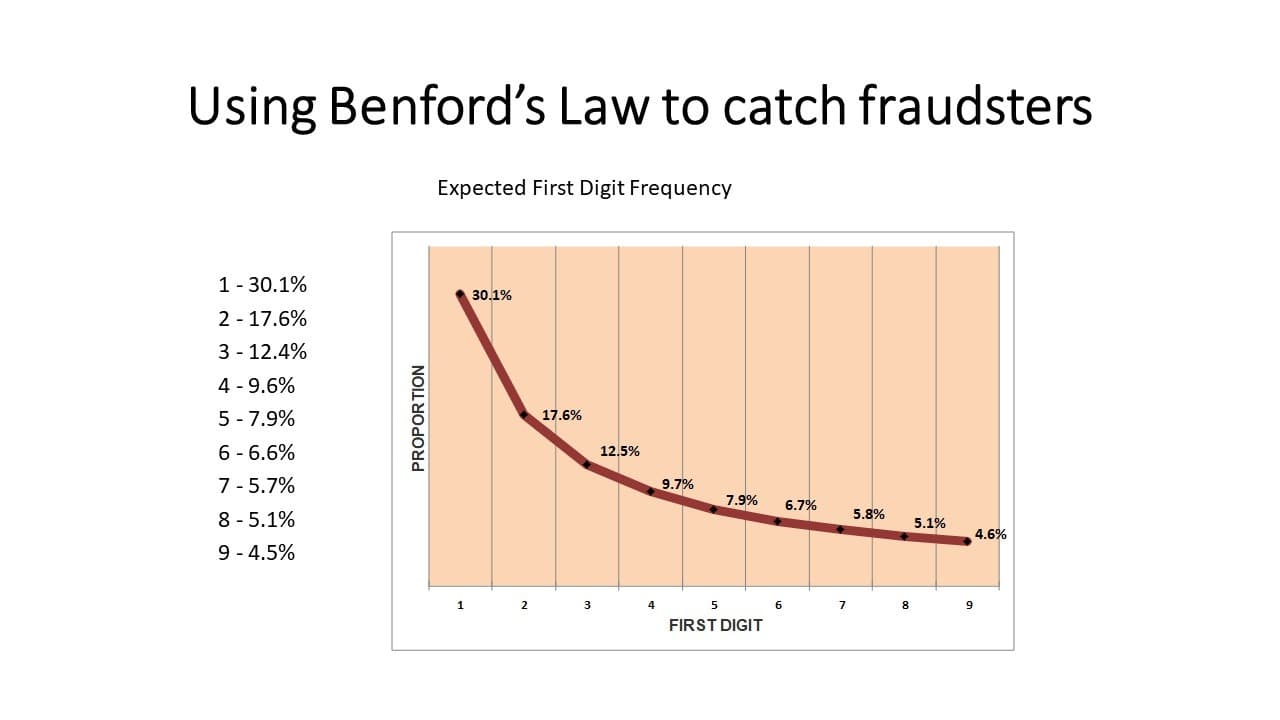
The hidden patterns in data help identify fraudsters. In 1938, an engineer, Frank Benford, found that there were predictable patterns to digits in tabulated data. For many years, this was known only to a few math and science people. In the 1980s, accountants started experimenting with its use. Later, it found its way into forensic software. This course starts with its original discovery in 1881 by a Canadian, Simon Newcomb, and his obscure paper that started it all. Then, in 1938, Frank Benford, a cut-and-fit engineer, demonstrated its proof. Later, accountants that understood math took it to be used as an auditing tool.

Financial & Fraud Investigator
Greg Wright has leveraged his experience in financial services and corporate finance to help him investigate fraud, conduct background research, and recover financial judgments. He has conducted hundreds of interviews of witnesses and fraud suspects. He is a Certified Fraud Examiner, Certified Financial Planner, Chartered Life Underwriter, and Chartered Financial Consultant. He received his MBA degree from Butler University.
