Master the most subjective and heavily scrutinized areas of IFRS to minimize reporting risks, prevent material misstatements, and build highly defensible financial statements.
Many material financial reporting issues do not arise from calculation errors or technical non-compliance, but from judgement applied in areas where accounting standards allow interpretation and management assumptions significantly influence outcomes. Revenue recognition, impairment assessments, expected credit losses, provisions, going concern assessments, fair value measurements, and management estimates often become the areas receiving the greatest audit scrutiny and regulatory attention. As reporting environments become more complex and economically uncertain, the quality of accounting judgement increasingly influences reporting credibility and financial risk.
This session examines high-risk judgement areas within IFRS reporting from an advanced accounting and audit perspective. The course explores how management assumptions are developed, challenged, documented, and supported within financial reporting processes, while considering the interaction between technical standards, internal controls, audit evidence, and regulatory expectations. Participants will gain practical insight into how experienced finance professionals approach difficult reporting decisions in complex environments.
Key Topics Discussed:

Accounting and Finance Professional
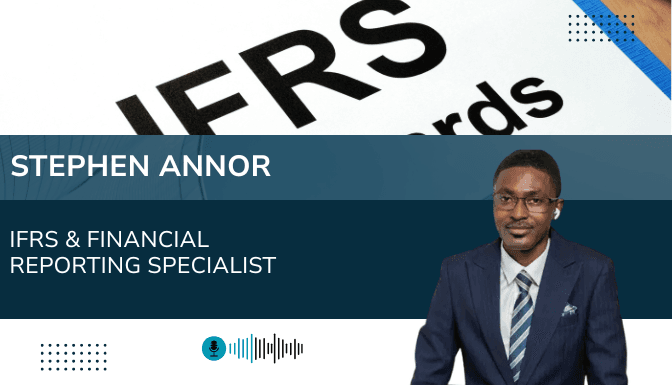
Stephen Annor is a finance and accounting professional with over eight years of experience in financial reporting, auditing, payroll administration, and IFRS compliance. He has worked across diverse finance roles, including Accountant, Finance Officer, and Auditor, supporting organizations in financial management, internal controls, and reporting accuracy. Stephen currently works remotely as an Accountant/Auditor AI Trainer, where he applies accounting expertise to evaluate financial data and improve AI-driven financial analysis. He holds a BSc in Administration (Accounting) and is pursuing a professional certification at Association of Certified Charactered Accountant. His areas of interest include IFRS reporting, audit readiness, financial controls, and the use of data analytics to support informed business decisions.
